
Find the Dane County Owner of Record
A Dane County property search runs in a short sequence. It moves from address to parcel to name. Find the parcel first. Read the owner field in the assessor record next. Then confirm that name against the most recent deed in the land index. Assessment rolls can lag behind a recent closing. The recorder's deed records are the stronger anchor.
- Search the street address in AccessDane and note the parcel number.
- Read the published Owner field and separate situs from billing address.
- Use the parcel and legal description to find the most recent deed.
- If an entity owns the land, check its Wisconsin DFI or probate record as a lead.
Quick Search offers Owner, Address, and Parcel routes. Enter owner names First, Middle, Last. Matching runs as contained text, so partial-name candidates can appear in the results. Start with the most distinctive part of a name. Then compare each hit's parcel number and situs address. A trust, LLC, or estate owner should be copied exactly for the deed-index search.
What AccessDane Shows About an Owner
An AccessDane parcel result can show owner name, situs address, billing address, parcel number, and assessment and tax links. It can also show legal description, aerial context, and a related land-record reference. Billing and situs addresses can differ. These fields identify the property and its owner of record. They do not reveal who lives there. For an LLC, trust, or estate, the named entity becomes the search term. Use it for the next source.
The sample record also warns that Madison information may go stale during software deployment. Dane County publishes no fixed deed-to-roll update interval. A just-recorded deed can outrun the assessment roll. Compare a recent sale with the Register of Deeds instrument. Don't guess how many days have passed.
The AccessDane sample parcel card shows the grouped owner, billing, map, and tax information.
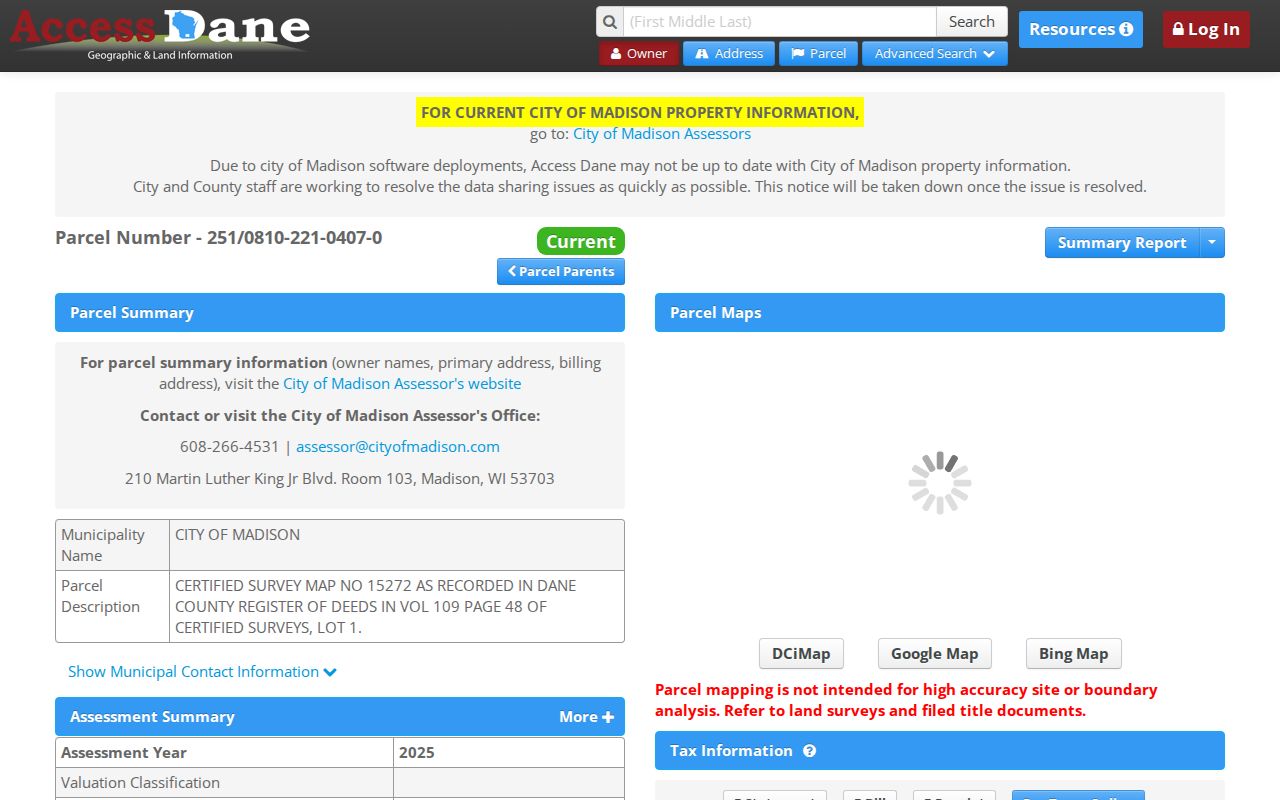
Use the parcel number and legal description to confirm the deed covers the same tract.
The billing line is a tax-mail destination. It can belong to a company, an agent, a nonresident owner, or a post office box. That detail helps separate similar records. It is not proof that anyone named lives there. Keep the owner, billing, situs, and legal description in separate notes and compare parcel records side by side.
Dane County Owner Names Can Be Hidden Online
AccessDane is an opt-out public display. The county reports that about 97 percent of owner information stays published. Owners can request removal from the Internet view. The record may still be open at the county or municipal counter. A blank owner field never proves a parcel lacks a recorded owner.
The county privacy page explains the removal process. It also gives the public-service reason for keeping counter access. When a web name is suppressed, use the county's current instructions. Skip commercial profiles as proof.
Eligible Wisconsin Safe at Home participants use a designated substitute address. That protection can separate the public display from a physical residence. Never guess at an identity. The gap is deliberate. If an owner or address is missing, continue with the recorded land instrument. Or ask the custodian about a lawful records request.
Confirm the Owner in the Deed Index
A deed names the grantee who receives an interest. Search the latest instrument under that grantee. Then compare its recording date, party names, and legal description with the AccessDane parcel. The deed index goes back to January 1975 online. Most document images open by document number. A fresh deed can outrun the tax roll.
A mismatch is a signal. Look for a later deed, a correction, an estate conveyance, or a parcel split. The Dane County deed records process explains how the index works and how to retrieve older records.
The Register is back-indexing material from before 1975. Older records may need public-terminal or staff-assisted research at the office. A deed with a later recording date can be the best evidence of a transfer even when the assessment owner lags.
LLCs, Trusts, and Estate Owners in Dane
A company on the deed is common in Dane County. The deed and parcel card may list only the entity name. So the person behind it stays off the record. The Wisconsin DFI Corporate Records Search can help. It shows business status, the registered agent, the principal office, and filing history. But note the limit. A registered agent is a contact point, not proof of who owns the parcel.
Deaths change the paper trail too. After an owner dies, the trail may include a probate file or a personal representative deed. It may also hold a transfer-on-death affidavit or an entirely new deed. CCAP can point toward an estate matter. The recorded conveyance is what ties that transfer to the land itself. Keep the owner question fixed on the legal entity named in the source. Do not settle for a person who merely appears in the file.
Search the decedent, the personal representative, and any named beneficiary as separate parties. A probate summary or estate inventory can suggest where to look. Still, only the recorded instrument links the event to a legal description. A court-authorized conveyance does the same. The same caution applies to business agents. A company contact's name does not by itself identify the person. It does not show who owns or controls the land.
Use Billing Address as a Locate Clue
Situs is where the parcel sits. Billing or mailing is where the tax notices go. That address might be the owner's home. It might also be a business, an agent, or a post office box. A distant billing address can help separate two similar owner records. It is not the property address, though. It is not a guaranteed way to reach the owner personally.
AccessDane and the Treasurer's tax links can show different levels of owner-address detail. If a tax bill needs fixing, follow the Treasurer's posted procedure. One more caution. Never assume a recent deed updated every mailing field at once.
Watch for Dane County Deed Scams
Dane County's Register of Deeds has a warning. TaxRegistry.org mail is not a county service. The county instead promotes a free Property Fraud Alert. It can send email, text, or phone notices. This happens when a document is recorded under a registered name. That alert is only a notice of a filing. It is not an ownership certification, and it does not block recording.
Verify a suspicious letter through the county's official address or office number. Never pay an unsolicited service that claims to offer a required deed copy. The Register of Deeds page explains the alert and the county warning.
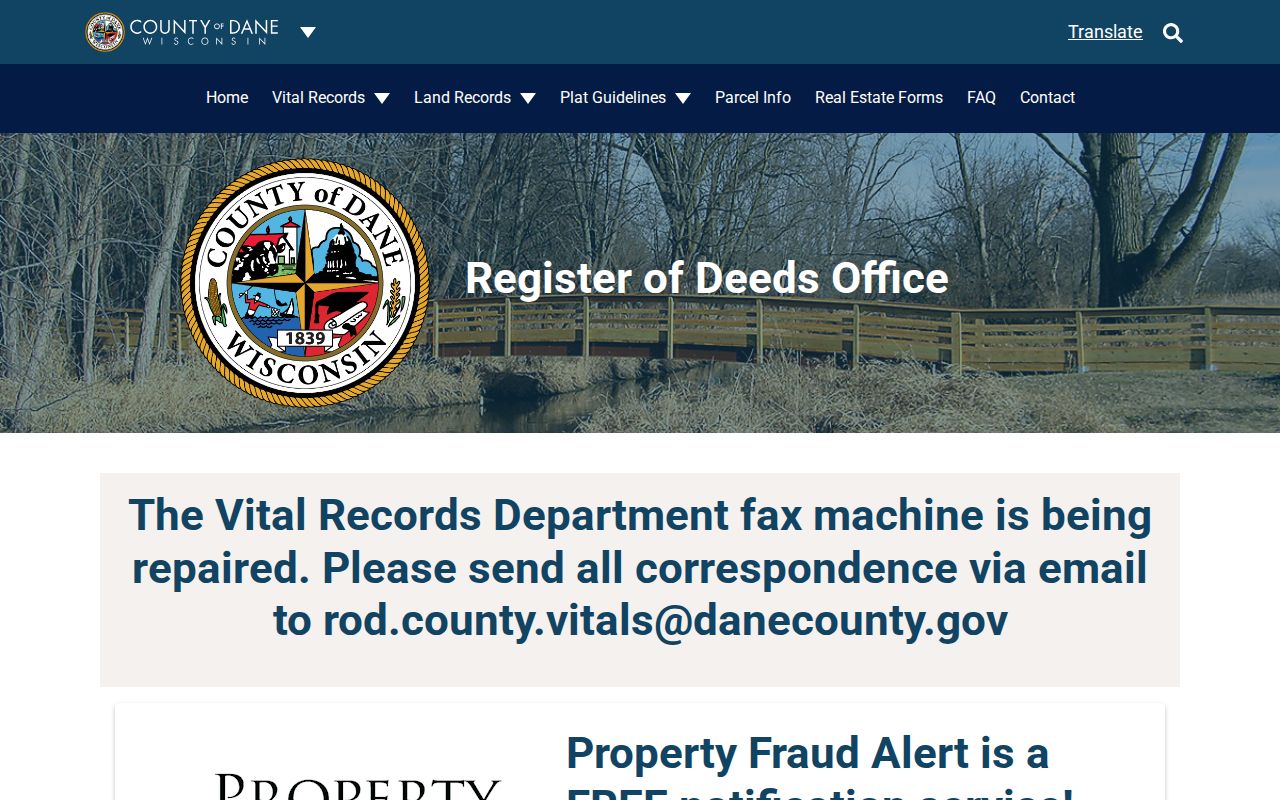
Note: If an alert flags a transfer you do not recognize, review the filed document itself with the custodian.
Sources for a Dane County Property Owner
Ownership shows up in three official places in Dane County. The assessment roll publishes an owner field along with the parcel context. The deed index records grantees and the instruments that transferred title. GIS connects parcel geometry to a location. A map label is only a reference point, though, never a title document.
| Source | Owner Info It Gives | Access |
|---|---|---|
| AccessDane | Published owner, situs, billing, parcel | Free public search; opt-out applies |
| Register of Deeds | Grantee and recorded instrument | Online index from Jan. 1975; office fallback |
| Wisconsin DFI | Entity status, registered agent, filings | Public business search |
| CCAP / probate file | Estate lead and case summary | Public summary; restricted files vary |
The owner of record is whoever the property system names. That may not be the occupant. A trust or a company can hold title. No individual may appear on the parcel card. So a lookup answers who is listed, not who is physically present.
Treat the source table as a sequence rather than a set of interchangeable answers. AccessDane leads on current public ownership. The Register of Deeds shows the grantee and the recorded conveyance. DFI describes an entity, and CCAP may show a probate proceeding. Each record has its own privacy boundary. A corporate filing or a court case alone does not establish the present owner. It cannot bind a particular parcel.
AccessDane takes owner names in First, Middle, Last order and matches on contained-in logic. A fragment can return several people or entities. Even an exact-looking hit needs a parcel check. Pin down the land with the street address or parcel number first. Then compare the owner record against the newest deed for the same legal description.
A name hidden from the public web is not a dead end. Ask the county about its opt-out and counter-access procedures. The county reports that public-duty access may remain even after an Internet display is removed. Respect the owner's privacy choice. Resolve a legitimate land-record question through the deed or an authorized records request.
Limits on Who Owns a Dane County Parcel
A public owner field proves no set of rights or claims. It also cannot confirm who occupies a building. Wisconsin Safe at Home gives eligible participants a substitute address. The county's owner opt-out can suppress Internet display. Honor those protections, and settle any title question against the actual recorded chain of deeds.
Lawful use. Use Dane County owner information for property research, house history, or a legitimate parcel question. Do not use it to stalk, threaten, or harass a person.