
Fields in a Dane County Tax Record
A tax record blends assessment data with billing and payment detail. Not all of those numbers come from one office. AccessDane links the parcel to current and historical tax information, while the municipal treasurer may control the final bill and local special charges.
| Field | What It Shows | Where |
|---|---|---|
| Assessed value | Parcel value used in the assessment process | Municipal assessor / AccessDane |
| Assessment notice | Value notice and local review steps | Municipal assessor |
| Bill and amount due | Charges, due dates, accrued interest, penalty | Treasurer tax detail |
| Payment history | Past payment dates and amounts | Dane County Treasurer |
| Tax allocation | Bill breakdown and payment allocation | Tax Information Details |
An assessed value is not a sale price. It is not an appraisal either. The bill reflects tax-year charges and payment status, which can shift even when the parcel's assessment stays the same. The separate Dane County property-value explanation covers what assessed and sale values mean.
Dane County E-Bill and Payment History
AccessDane gives each task its own view. E-Bill shows the tax-year bill and statutory due dates. E-Receipt covers current-year payment. E-Statement shows what remains due, including accrued interest or penalty. Tax Information Details breaks down the bill and payment allocation. Tax Payment History keeps prior payment amounts and dates. Search the same parcel number across these views. If an address search returns a different billing name or location, compare the parcel. Do not assume the bill belongs to a neighbor. The county portal lists online payment routes, and payment processing may add an electronic fee. The Dane County Treasurer links to bill, receipt, statement, and history tools.

Start with the payment-history view. Confirm the dates it shows for the parcel. Then compare the current statement if a balance remains.
Keep three dates separate in your notes. Assessment date, tax year, and payment date are different things. A new assessment may be issued before the related tax bill is calculated, and a payment record only confirms a transaction on the date shown. E-Bill supplies the statutory due dates. E-Statement is the better view for the amount due after accrued charges.
The Treasurer's tools do not cover every bill source. Local treasurers may handle the final bill and special charges. A county record can be complete for county-collected items while a city or town record adds its own assessment. Compare by parcel and tax year rather than matching only a taxpayer name or mailing address.
The Treasurer's office is at 210 Martin Luther King Jr. Boulevard, Room 114, Madison. Hours run weekdays, 8 a.m. to 4 p.m. The county lists its general property-tax tools online, including E-Bill, E-Receipt, E-Statement, Tax Information Details, and Tax Payment History. If the portal's balance and a municipal notice disagree, ask the relevant treasurer which tax year, payment allocation, or local charge is still outstanding.
Assessment Notices and Dane County Review
Wisconsin's tax year and assessment date are separate ideas. The two dates rarely line up. An assessment notice reports a value for the roll. The bill instead reflects the tax-year schedule and the local levy, so each document answers a different question. Dane County's Treasurer page explains Notice of Assessment, Open Book, and Board of Review, while the municipal assessor calendar supplies the dates and filing steps for a specific community.
Open Book is the early chance to discuss a value with the assessor. If that talk fails, the Board of Review is the formal local route. The county page links forms and process information. There is no single county deadline. Each municipality sets its own calendar, so rely on the local notice and schedule.
Read the notice closely. Check the description, the year, and the local dates. A factual correction, such as a missing improvement or incorrect parcel detail, is different from a disagreement with the value. Bring the notice and supporting papers to the assessor. If the matter proceeds to Board of Review, use that body's filing instructions and deadline rather than a generic county date.
The assessment and appeal page lays out the county's Notice of Assessment, Open Book, and Board of Review material.
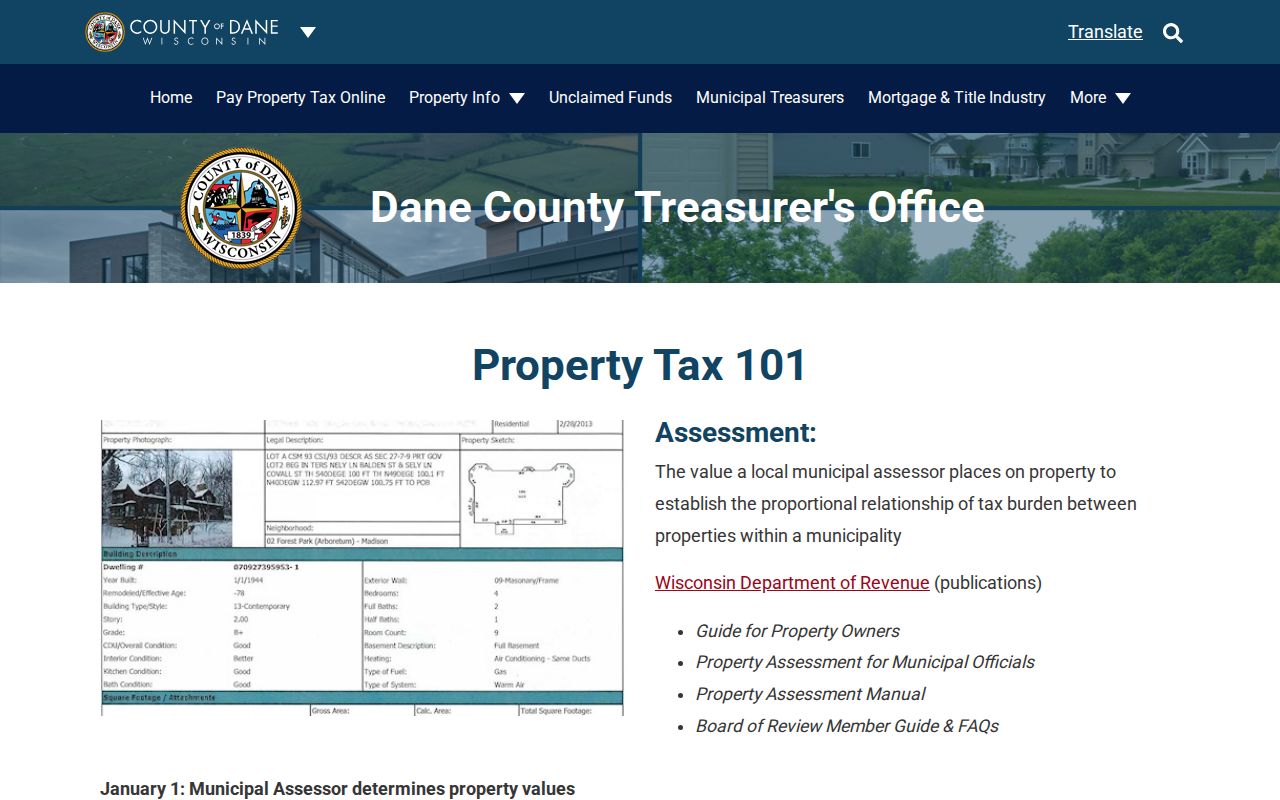
Rely on the date printed on the notice. The assessor's local schedule, not a general countywide date, governs the process.
Search Dane County Tax Records by Parcel
The Treasurer's tax search accepts Owner, Address, and Parcel. The route mirrors the county property lookup. Results aim at bills and payments, and a parcel number is the best way to compare a current bill with an older payment line.
| E-Bill | Tax-year bill and due dates |
|---|---|
| E-Receipt | Current-year payment record |
| E-Statement | Amount due with accrued interest or penalty |
| Tax Information Details | Bill breakdown and payment allocation |
| Tax Payment History | Past payments and dates |
The Treasurer FAQ gives search steps. It also explains the history fields. If a mailing address needs correction, follow the county's published process, since a deed address and a tax-bill address may not be the same.
Open a Dane County Tax Bill
The bill lookup shows the amount, due dates, payment status, and past history. Some towns and cities do their own final billing. Confirm any local charges with that treasurer as well.
- Search by parcel or address in the Treasurer's AccessDane tax links.
- Open E-Bill for the current bill and E-Receipt for a payment record.
- Use E-Statement for the balance, including accrued charges.
- Review Tax Payment History for earlier dates and amounts.
- Assessed value
- The assessor's value for the tax roll; it is distinct from the sale price.
- Equalized value
- A state-level value used to compare municipalities and distribute tax burden.
- Tax levy
- The amount a taxing body raises through property taxes.
- Tax lien
- A recorded or statutory claim tied to unpaid taxes.
Assessment Ratios and Equalized Values
Wisconsin DOR publishes municipality-level aggregate ratios and statements of assessment each year. The ratio compares assessed property values with estimated full market value for a municipality. Equalized value plays a different role. It supports statewide tax allocation across jurisdictions. Neither figure is a parcel appraisal. Neither should stand in for the individual assessment card on file with the local assessor.
The DOR property-owner guide walks through the assessment ratio formula. It also explains the fields on a notice. Pick the report year that matches your question. Then return to the local assessor for the parcel's own land and improvement values. See Wisconsin DOR assessment reports for municipality-level ratios and equalized value material.
Dane County Delinquency and Tax Deeds
Dane County warns that unpaid principal accrues 1.5 percent interest and penalty each month. The accrual begins February 1. A delinquent balance can push a routine bill lookup onto a different path. Check the Treasurer's tax deed auction page first. Then open the parcel detail. Review any recorded documents before drawing a conclusion about the property.
The available-parcels page refreshes six weeks before an auction. It refreshes again after a quitclaim deed follows a sale. Listings identify the parcel, its address, the appraised value or minimum bid, and bid deadlines. Supporting material may include reports, professional appraisals, meeting minutes, and photographs. The Treasurer cautions bidders to review special charges and access conditions on their own. The tax-deed auction page separates available parcels from sold ones.
Each available listing may link to AccessDane for the tax and legal description. A Details route can hold committee reports, professional appraisals, and Treasurer parcel reports. Meeting minutes and photographs may appear when posted. The bid form can even arrive prefilled with the parcel number and closing time. A sold-parcel entry may later point to the quitclaim deed. Check that deed in the land-record index along with any current tax balance. Do not rely on either record alone.
Sun Prairie's 2026 Revaluation
Sun Prairie announced a citywide revaluation for 2026. The new assessment work aims to reflect market value as of January 1, with values anticipated in late July. The city cautions that a higher assessment does not mean every owner's taxes will rise by the same amount or rise at all; the tax bill also depends on levies and the parcel's tax context.
The assessor links current and historical AccessDane data, residential sales spreadsheets for 2024-2026, neighborhood mapping, and state guidance. This is a city-specific assessment event, not a countywide reassessment notice. Check the city page for its own review schedule and compare the notice with the parcel record.
The Sun Prairie Assessing page posts the revaluation notice and neighborhood tools.
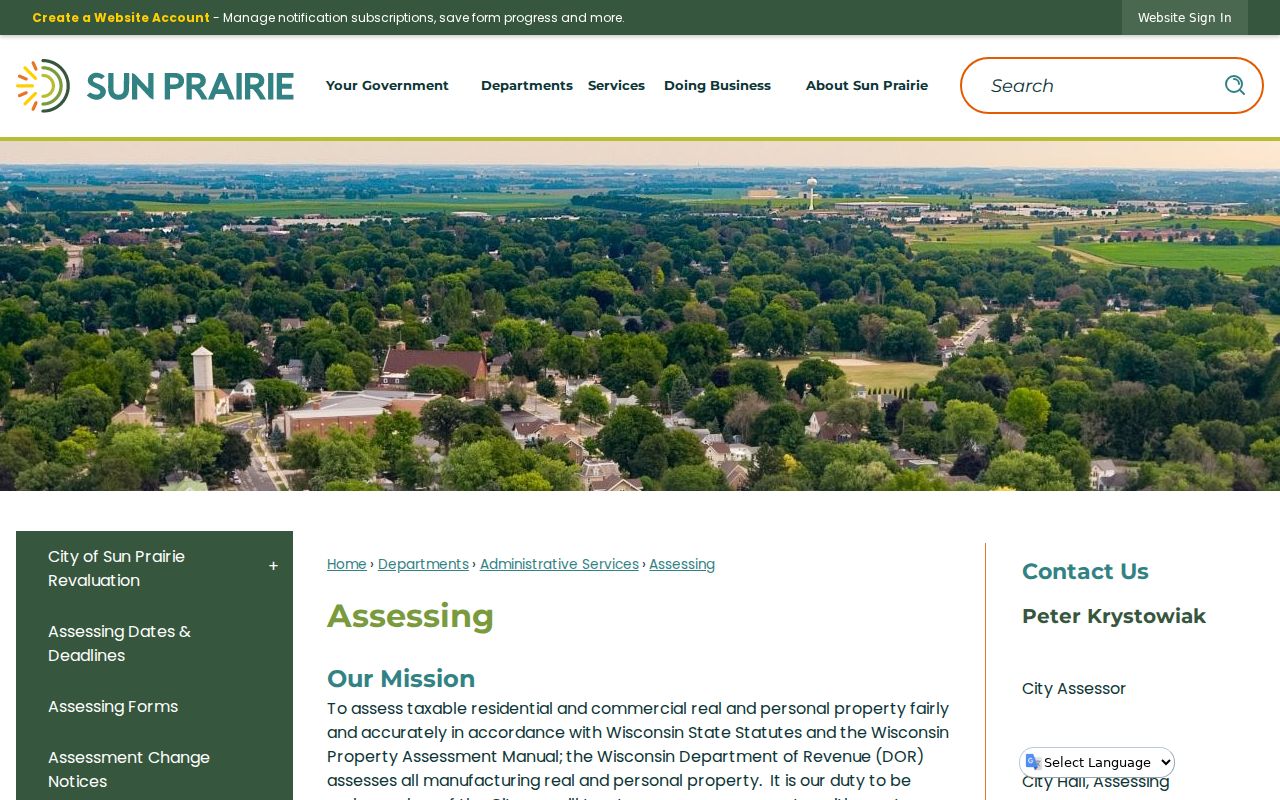
One caution when comparing records. Keep the city's assessment year separate from the tax year shown on a bill when weighing an old record against a new one.
Challenge a Dane County Assessment
Start with the notice itself. Check the assessor's value and the property description for errors. Use Open Book to raise a factual or valuation question with the office. A clear record should separate land from improvements, identify the assessment year, and include comparable property information when available. Those details carry more weight than a general complaint. A question may remain after Open Book. The Board of Review is the formal local path.
Review window. Dates and filing steps are set locally and appear with the assessment notice or assessor instructions. Follow that notice for the applicable Open Book and Board of Review schedule.
Assessment evidence should identify the parcel and the valuation period. A nearby sale, by itself, is not enough. Wisconsin DOR publishes municipality-level statements and ratios. These help compare local assessment levels with estimated full market value. Those statewide comparisons give context to a local appeal. The assessor's parcel record and the notice remain the documents for an individual property.
Keep the notice and any assessor correspondence together. Keep the Board of Review filing instructions there too, along with the year and parcel number. The county page supplies the framework. Local review schedules are set for the community and appear with its notice or assessor directions. A response prepared for one year's Open Book should not be assumed to satisfy a later year's filing deadline. Prepare fresh for each appeal year.