
What Dane County Deeds Record
The Register of Deeds records instruments that transfer or otherwise affect an interest in land. A deed names the parties and legal description. Other filings create, assign, release, or describe an encumbrance. A document category helps narrow a search, but the full image shows what the parties actually filed.
| Deed Type | What It Does | Common Use |
|---|---|---|
| Warranty or quitclaim deed | Conveys the grantor's described interest | Sale, family transfer, or title cleanup |
| Trustee or executor deed | Records a transfer by a fiduciary | Trust or estate conveyance |
| Mortgage or assignment | Creates or transfers a security interest | Loan and lender history |
| Satisfaction or release | Shows a recorded discharge | Check whether an earlier lien was released |
| Plat or CSM | Records subdivision or surveyed division | Lot, block, and parcel history |
Deeds, mortgages, assignments, satisfactions, releases, liens, lis pendens, easements, restrictive covenants, condominium documents, affidavits, probate conveyances, and plats all appear across the Register's real-estate records. A mortgage does not disappear when a parcel sells. Look for the matching satisfaction or release. Read an instrument's stated role before counting every filing as a transfer.
A deed conveys whatever interest its grantor describes. A mortgage or assignment follows financing. A satisfaction shows a named obligation was discharged. An easement or covenant can still matter after the owner changes. A lis pendens signals litigation affecting the land, and it can be paired with its court case. The index entry is only a locator, so review the full image and attachments before drawing conclusions about scope.
Dane County's Online Index Starts in 1975
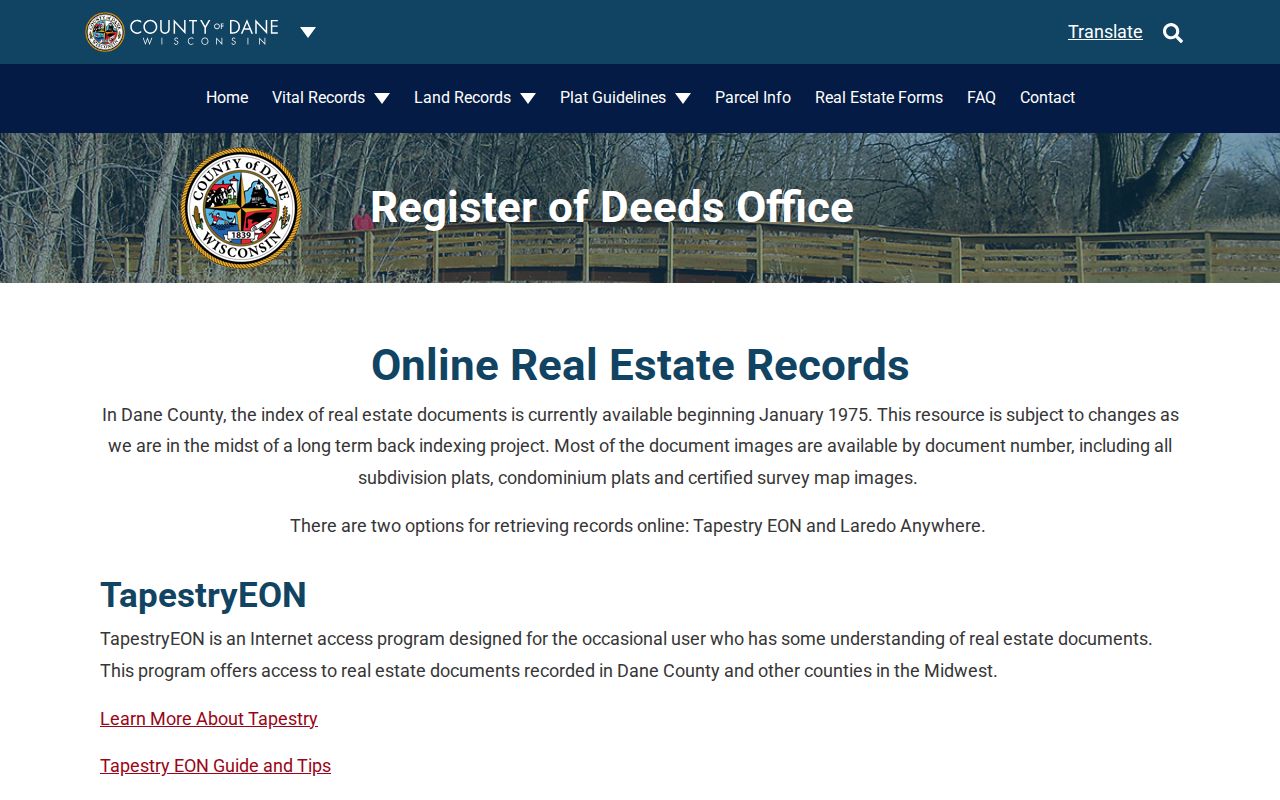
Dane County's online deed index starts in January 1975. Back-indexing of older records continues. Still, no promise exists that every earlier document is already searchable online. Most document images can be retrieved by number, including subdivision plats, condominium plats, and certified survey maps.
Two vendor paths serve different users. TapestryEON suits occasional users with some real-estate-document knowledge. Laredo Anywhere fits firms with daily needs. The official page does not publish the live vendor controls, the result cap, or the current per-image price. Check those details in the portal before budgeting for a large search.
The Register of Deeds online-search page describes both vendor paths and the coverage line. The 1975 coverage note appears there too.
Whichever service you use, write down the vendor, your query terms, and each retrieved document number. Then read the live service's terms. Do this before ordering or relying on a large result set. The Dane County Register of Deeds search page shows the online index entry point and the 1975 coverage note.
A miss before 1975 is not proof. Treat it as a cue to continue with the legal description and an in-person office search rather than the end of the chain.
Follow the Dane County Grantor-Grantee Chain
A grantor conveys the interest. The grantee receives it. To trace a Dane County parcel, begin with the current owner or parcel record and treat that owner as the grantee. That deed names an earlier grantor. Then search that party as grantee, repeating until the online boundary or a source gap forces an office visit.
- Find the latest deed under the current grantee.
- Record the grantor, document number, date, and legal description.
- Search the grantor as a prior grantee and compare the land description.
- Continue backward, using the office for records before the online range.
- Grantor
- The party that conveys the interest described in the instrument.
- Grantee
- The party that receives the stated interest.
- Chain of title
- The sequence of recorded transfers tied to the same land.
- Document number
- The reference used to retrieve most county images.
Keep names exact. Keep legal descriptions exact too. A middle initial, spouse, trust name, or parcel split can change the next search, and for a longer route through prior owners the dedicated Dane County former-owner chain goes deeper.
Dane County Document Numbers Open Images
The online service supports party-name search, document-number lookup, and image retrieval by document number. Filter options beyond those are unconfirmed. Do not assume a date, municipality, or document-type filter exists until the live screen shows it.
When an index row points to an instrument, copy the document number before leaving the result. Open the image with it. Check that the pages contain the parcel's legal description. Note every attached page. A party result alone may not show the exact role or consideration column.
Older Dane County Deeds Need Land Clues
Older Dane County deeds rarely name a current street address. Instead they describe property by subdivision, lot and block, CSM, government lot, township-range-section, or metes and bounds. Gather the old owner name, the approximate year, and the full legal description. Then request the older book or index. Back-indexing continues, but the in-person vault still matters for an older chain.
Recorded plats and CSMs often explain why a land description changed. The county's 2026 Plat Book is a separate map aid, not the controlling recorded document. Preserve punctuation and lot labels from the deed. Match them exactly against later maps and tax cards.
Separate Recorded Liens from Court Cases
A lien can show up in more than one place. It may sit in the Register of Deeds index, a court case, or both. CCAP docket summaries point to foreclosure, construction, hospital, condominium, and state tax lien matters. These matters arise across Dane County. The summary is only a lead. The recorded instrument, along with any satisfaction or release, still has to be checked at the land-record office. Only then does the matter count as settled.
The Record Center handles court file requests. It accepts walk-ins, mail, fax, and email. Phone requests are not accepted. Published charges include $1.25 per copy page. There is $5 for a name search without a case number, and $5 for a certified document. Exemplification plus pages costs $15. Copies from a court file answer a different question than the deed index does. The index, not the docket, shows what was recorded against a parcel.
The Record Center sits in Room 1002 of the Dane County Courthouse, 215 S. Hamilton Street, Madison, open weekdays from 7:45 a.m. to 4:30 p.m. Bring the full legal name and any aliases. Add a case number if you have one. The request should also name the exact file or document wanted. A public CCAP summary supplies the case number, party names, case type, activity dates, and status. Civil availability varies, though, and restricted files never open through the public web.
Orders over $5 require prepayment. Older files may sit in remote storage. Retrieval can take several days. Inspection itself is free unless copies are made. Federal bankruptcy or foreclosure-related cases run through PACER instead. Municipal ordinance cases are not kept by Dane County's circuit court record center. The Wisconsin Circuit Court Access case-search page is the statewide starting point. It serves public Dane County docket summaries.
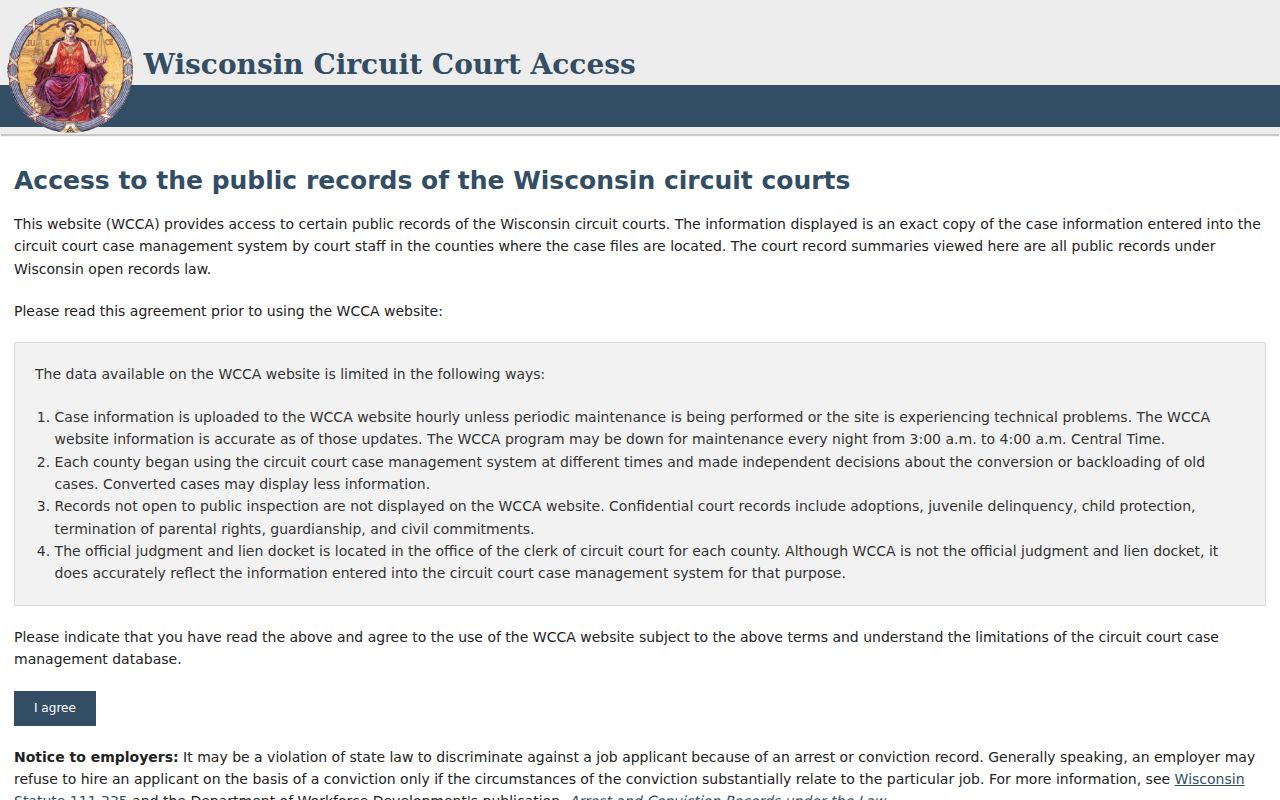
A docket can flag a related case. The recorded lien or its release still has to be checked in the county land index before the matter counts as resolved. The Dane County Record Center court-record page explains local file requests, inspection, hours, and published copy charges.
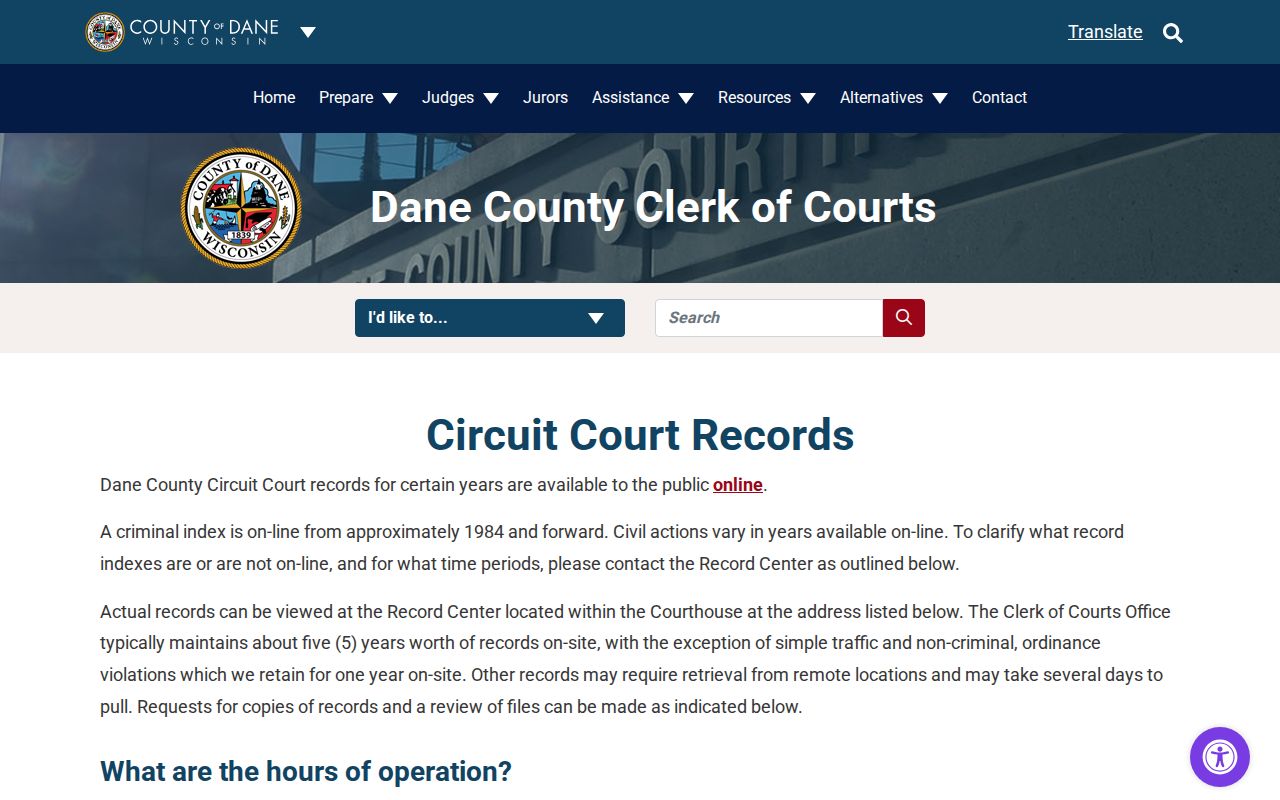
Two offices, two jobs. The Record Center holds the court file, while the Register of Deeds keeps the instrument attached to the land.
Check Dane County Filing Notices
One mailing scam has drawn an official response. The Dane County Register of Deeds warns that TaxRegistry.org letters are not a legitimate county service and points owners to its free Property Fraud Alert. Notice arrives by email, text, or phone whenever a document is recorded under a registered name. It surfaces new filings fast. It cannot prevent recording, and it does not decide whether an instrument is valid. Verify any letter through the county's published office number. Skip contact details printed on a payment demand. The Dane County Register of Deeds posts its warning and alert link.
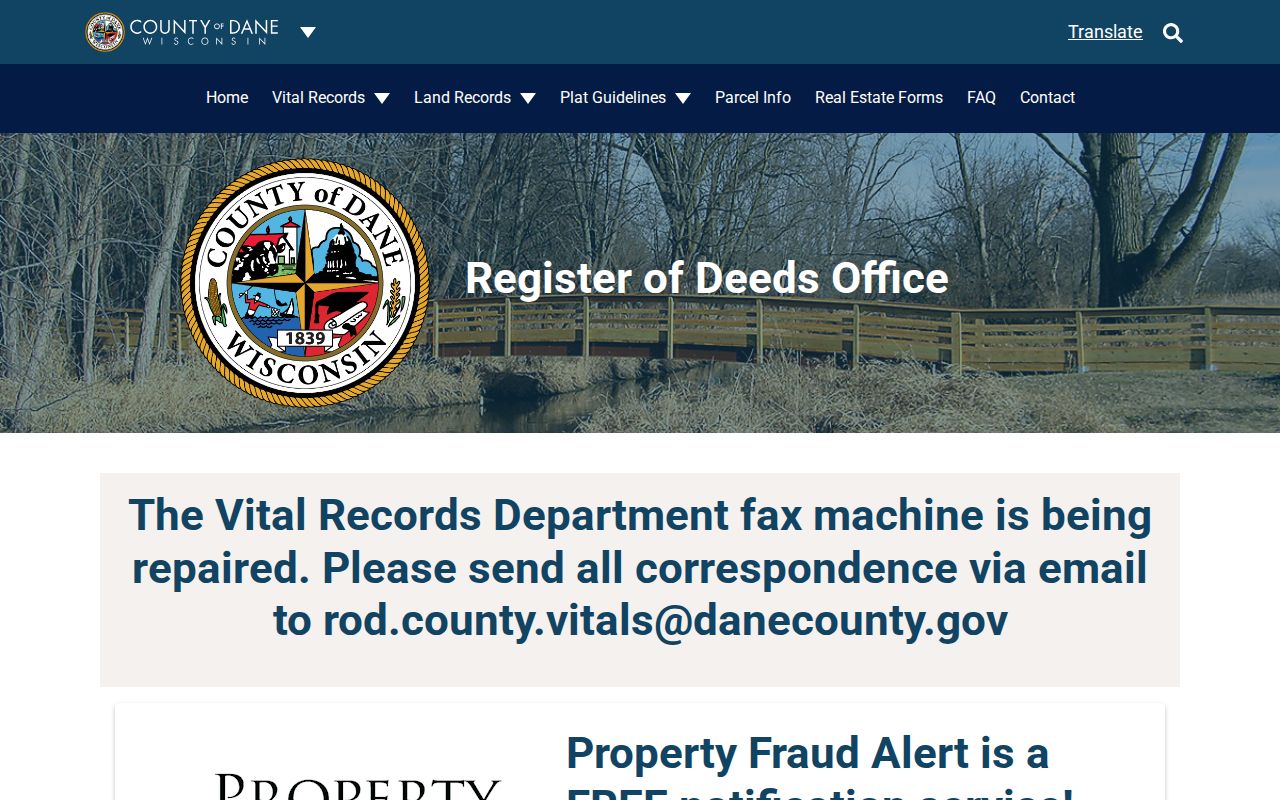
Use the alert as a nudge. Then inspect the filed document itself. If a filing looks wrong, speak with the custodian; the Property Fraud Alert signup page also lets owners choose the county and notification method.
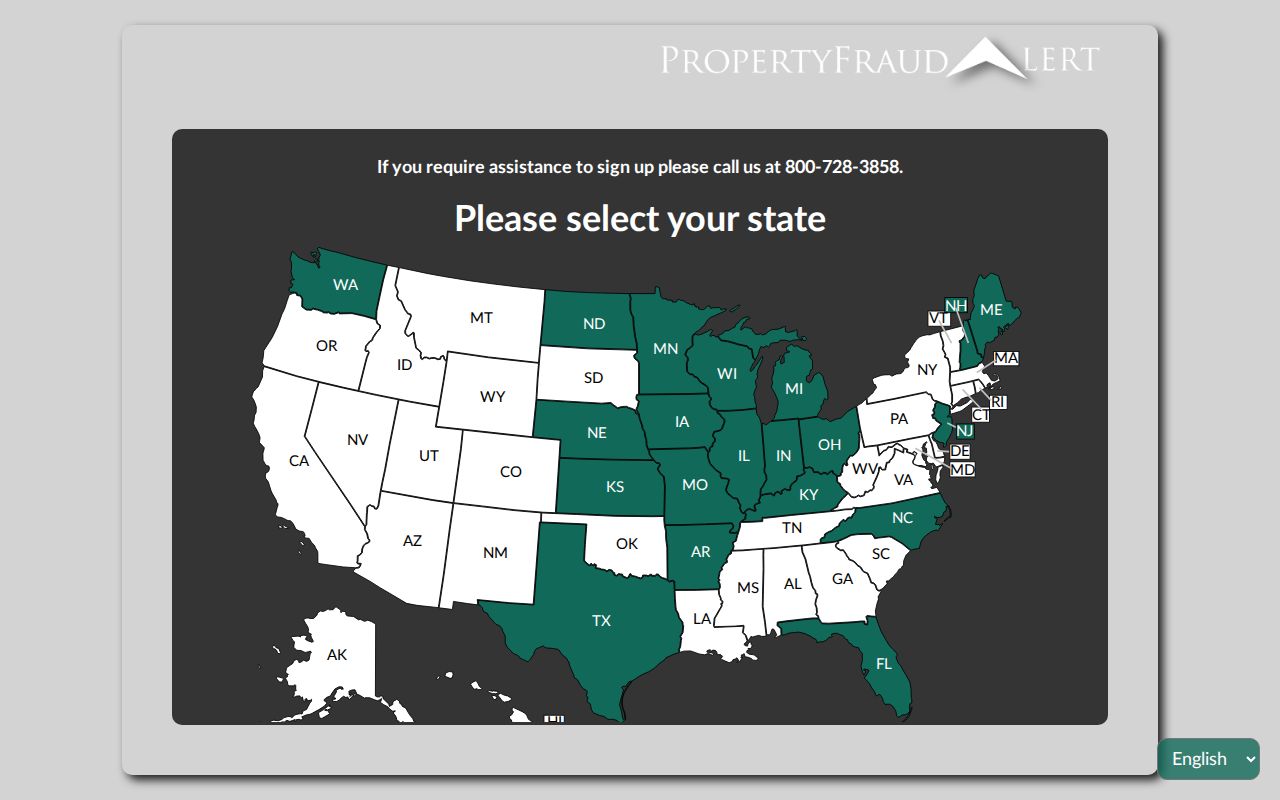
Register the official way, then check the flagged filing.
Request a Dane County Deed Copy
Viewing most land records at the Downtown Madison City-County Building costs nothing. Copies cost extra. The current Register of Deeds copy schedule is not published on the page, so confirm charges with the office before paying. For an online image, use the document number. That works only where the vendor permits. Older or hard-to-find records take more groundwork. Bring the parcel legal description, party names, and a likely date to the office.
Before sending payment for a certified copy or a staff-assisted search, check the office's current real-estate guidance. A deed is one link in a chain. It settles nothing about every interest, lien, or exception attached to the land.
For an older book or an unclear index entry, come prepared. Provide the former owner or grantor. Add the approximate year and the township or municipality. The exact legal description matters most. If a parcel was divided, include both the older and current parcel references. Add any known plat or CSM number as well. Back-indexing work at the office continues, so a missing online result is a reason to ask for a search path, not to assume a record was destroyed.
Phone service runs 608-267-8814 on weekdays from 8 a.m. to 4 p.m. Confirm the current process before visiting. That matters most for certified copies and older index help. Keep the document number and legal description together so staff can separate your instrument from other deeds under the same party name.
Recorded, not guaranteed. Dane County deed records show instruments filed in the land index. They are not a title opinion, and an unrecorded or unreleased interest may need separate review by a title professional or attorney.